
East Baton Rouge Parish Criminal Records
A criminal court record is the court file kept after a prosecution begins. In East Baton Rouge Parish, the Clerk of Court's Criminal Records Department prepares and processes criminal cases, works with the District Attorney and law-enforcement agencies, stores criminal records permanently, safekeeps evidence, and houses affidavits, bonds, warrants, and expungement materials. The record may start with a bill of information, indictment, affidavit, or warrant-related filing, then expand as hearings, motions, pleas, dispositions, and sentencing entries are added.
The 19th Judicial District Court is the main district court for parish criminal matters. Baton Rouge City Court, Baker City Court, and City Court of Zachary may handle city or lower-level criminal and traffic matters. Juvenile criminal matters are different because juvenile records are generally confidential under state law. The full criminal case record is also distinct from the arrest-to-charge path covered in East Baton Rouge Parish arrest records and court charges, which focuses on booking, filed charges, and charge status before the full case outcome is known.
Search East Baton Rouge Parish Criminal Cases
The official online starting point for 19th JDC criminal matters is ClerkConnect Criminal Inquiry. The static research capture confirmed the correct official route and portal purpose, but not every live form label. Use the portal fields shown in the live interface and search with the most exact name or case number available. If the online route does not return the needed record or document, contact Criminal Records at 225-389-3964 in Room 2501 of the 19th JDC Courthouse.
- Open the ClerkConnect Criminal Inquiry route for East Baton Rouge Parish criminal court records.
- Search by the case number or defendant name fields available in the live portal.
- Review the court, case number, filed charge, docket events, plea, disposition, warrant, and sentence entries.
- For documents, certified copies, older files, or records not exposed online, contact the Clerk's Criminal Records Department.
- For prosecution decisions, diversion, amendment, or dismissal questions, identify whether the District Attorney's office action changed the filed case.
The East Baton Rouge District Attorney is a key source because the DA screens, accepts, amends, rejects, diverts, or prosecutes charges through court filings.

DA action explains why an arrest charge, initial booking entry, and filed criminal court record may not match exactly.
East Baton Rouge Criminal Case Flow
Criminal court records change as the case moves through the court. A defendant may first appear in booking or warrant records, but the criminal court record becomes the case-level file after the prosecution is filed. The docket can then show arraignment, bond activity, motions, continuances, plea discussions, trial settings, verdicts, dispositions, sentencing, probation, appeal steps, and expungement motions. A single case may include several charges, each with its own status and outcome.
Case flow: Charges Filed › Arraignment › Pretrial / Motions › Plea or Trial › Disposition › Sentencing
| Stage | What Happens |
|---|---|
| Charges Filed | The DA files a bill of information or an indictment is returned, creating the court charge record. |
| Arraignment | The defendant is brought before the court, charges are addressed, and a plea may be entered. |
| Pretrial / Motions | Attorneys file requests, evidence issues are raised, hearings are set, and continuances may appear on the docket. |
| Plea or Trial | The case resolves by plea, verdict, dismissal, acquittal, or other court disposition. |
| Sentencing | The court records jail, prison, probation, fines, conditions, or other penalties after conviction. |
East Baton Rouge Criminal Record Fields
East Baton Rouge Parish criminal court records can contain far more than a charge name. The record may show court, division, judge, case number, defendant name, attorneys, filed charges, statutes, bill of information, indictment, bond, warrant, arraignment, plea, motions, verdict, disposition, sentence, probation, and expungement status. Some entries are short docket notes, while some are full filings or minute entries. Certified copies and permanent records are handled by the Clerk's Criminal Records Department.
| Field | What It Shows |
|---|---|
| Case Number | The court identifier used by the Clerk, DA, court, and records departments. |
| Defendant | The person charged in State of Louisiana versus defendant proceedings. |
| Charges | The filed offense or offenses, statute references, and any amended charge entries. |
| Bond or Warrant | Release conditions, bond type or amount, capias, bench warrant, or warrant recall activity. |
| Plea | The defendant's court answer, such as guilty, not guilty, or another plea authorized by law. |
| Disposition | The current or final result for each charge, including dismissal, plea, verdict, or other outcome. |
| Sentence | Jail, prison, probation, supervision, fines, costs, conditions, or other court-ordered penalties. |
| Expungement Status | Whether qualifying records have been removed from public access by court order. |
Charges vs Convictions
A filed charge is an accusation brought into court. A conviction is a final or formal finding of guilt through a plea or verdict. East Baton Rouge Parish criminal court records may show charges that were amended, reduced, dismissed, nolle prossed, diverted, or resolved without conviction. Reading only the charge line can lead to the wrong conclusion. The docket and disposition fields must be checked together before deciding what the case outcome was.
| Charge | Conviction | |
|---|---|---|
| Stage | Accusation filed or carried in the court case. | Final guilt result by plea or verdict. |
| Proof Level | Based on charging and prosecution standards. | Requires proof beyond a reasonable doubt or a valid plea. |
| Record Meaning | May be pending, amended, reduced, dismissed, or diverted. | Supports sentencing, probation, fines, or other penalties. |
| Best Field to Check | Filed charge, amended charge, and status. | Disposition, plea, verdict, and sentence. |
East Baton Rouge Criminal Case Offices
Criminal court records often involve more than the court and clerk. The DA handles prosecution. The Office of the Public Defender, East Baton Rouge Parish, represents eligible defendants who cannot afford counsel. The official OPD page lists court assignments for 19th JDC, Baton Rouge City Court, Baker City Court, Zachary City Court, and other local court settings. OPD is part of the criminal court ecosystem, but it is not a general legal aid office and does not replace the clerk's role as custodian of court records.
The Office of the Public Defender is relevant when an East Baton Rouge Parish criminal court record shows appointed counsel or court-assigned defense representation.
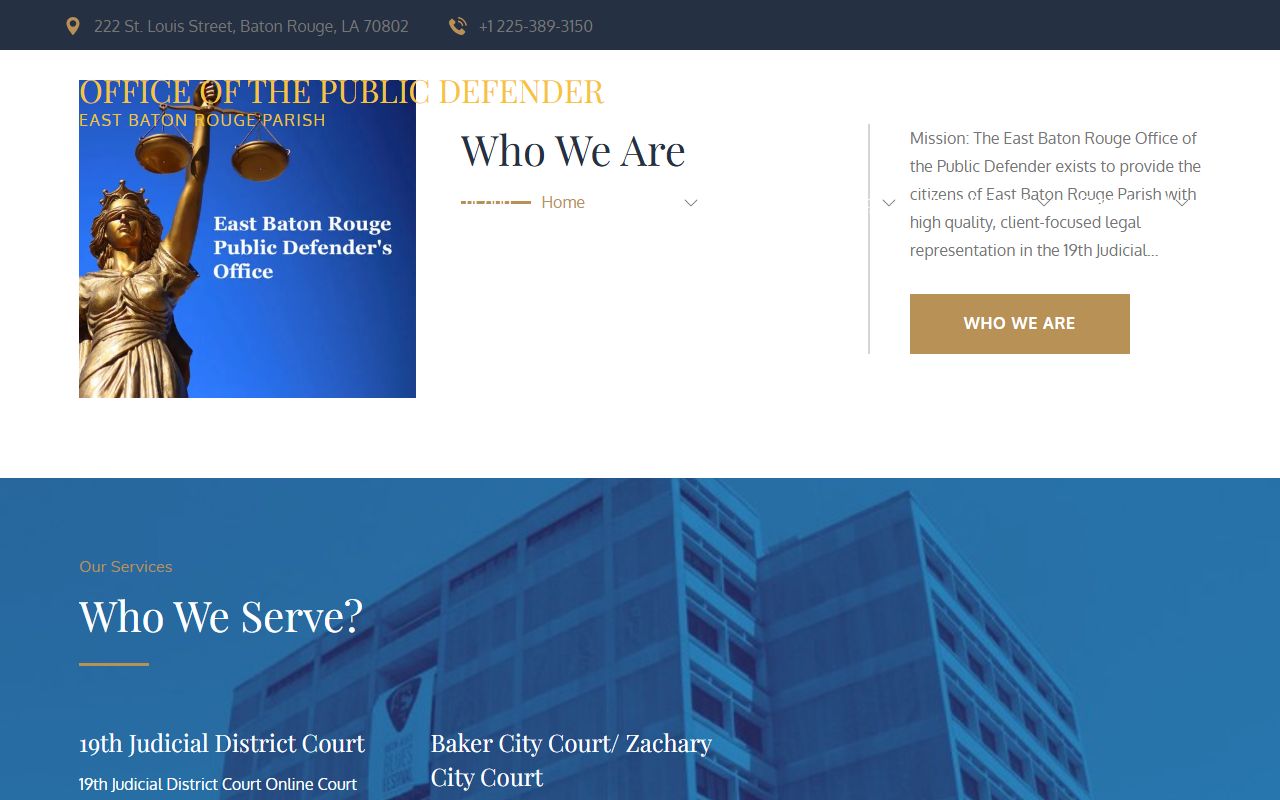
Defense counsel information may appear in the case record, but record copies still come from the court or clerk that maintains the file.
Sealed vs Expunged Records
Sealed and expunged records are not the same in Louisiana practice. Sealing restricts public access to a record by law or court order. Expungement removes qualifying arrest or conviction records from public access, but the research makes clear that it does not physically destroy the record. Courts, prosecutors, law enforcement, licensing agencies, or other authorized entities may still retain access depending on the statute and the order.
| Sealed | Expunged | |
|---|---|---|
| Public Visibility | Restricted from ordinary public view. | Removed from public access after the order is processed. |
| Record Existence | The record still exists under restricted access. | The record is not destroyed under Louisiana expungement rules. |
| Local Process | Depends on the court order or confidentiality law. | East Baton Rouge applications route through Clerk Criminal Records. |
| Authorized Access | May remain for courts or agencies allowed by law. | May remain for authorized agencies despite public removal. |
The Louisiana Code of Criminal Procedure expungement articles govern much of the expungement framework for criminal court records.
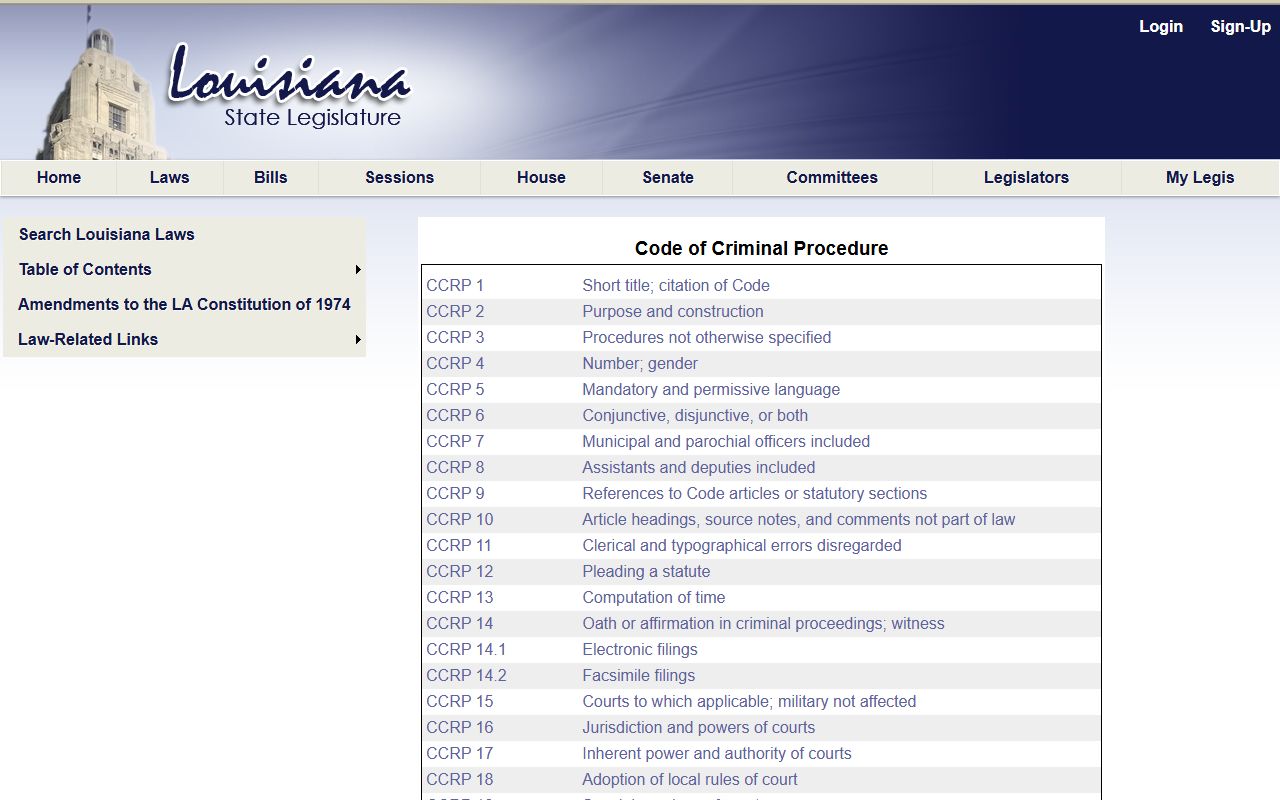
Expungement questions should be tied to the exact arrest number, case number, charge, disposition, and court order.
East Baton Rouge Criminal Records Access
Public access to criminal court records is shaped by Louisiana public-records law, court custody, and criminal-case restrictions. The public can often inspect or copy court records from the custodian, but active-investigation, prosecutive, juvenile, sealed, expunged, victim, witness, and personal-identifying information may be withheld. For court case files, start with the Clerk of Court and the 19th JDC channels. For sheriff incident reports or booking records, use EBRSO records channels. For statewide custody after sentencing, use Louisiana Department of Public Safety and Corrections systems rather than parish court records.
Juvenile records require special care. Louisiana Children's Code article 412 makes juvenile court records and reports confidential except as authorized, with juvenile traffic treated differently. Public pages and search copy should not promise juvenile criminal case access. Adult criminal records may also be redacted for Social Security numbers, financial details, minors, sensitive victim data, and sealed or expunged entries.
The juvenile confidentiality statute is a key limit on East Baton Rouge Parish criminal court records access.
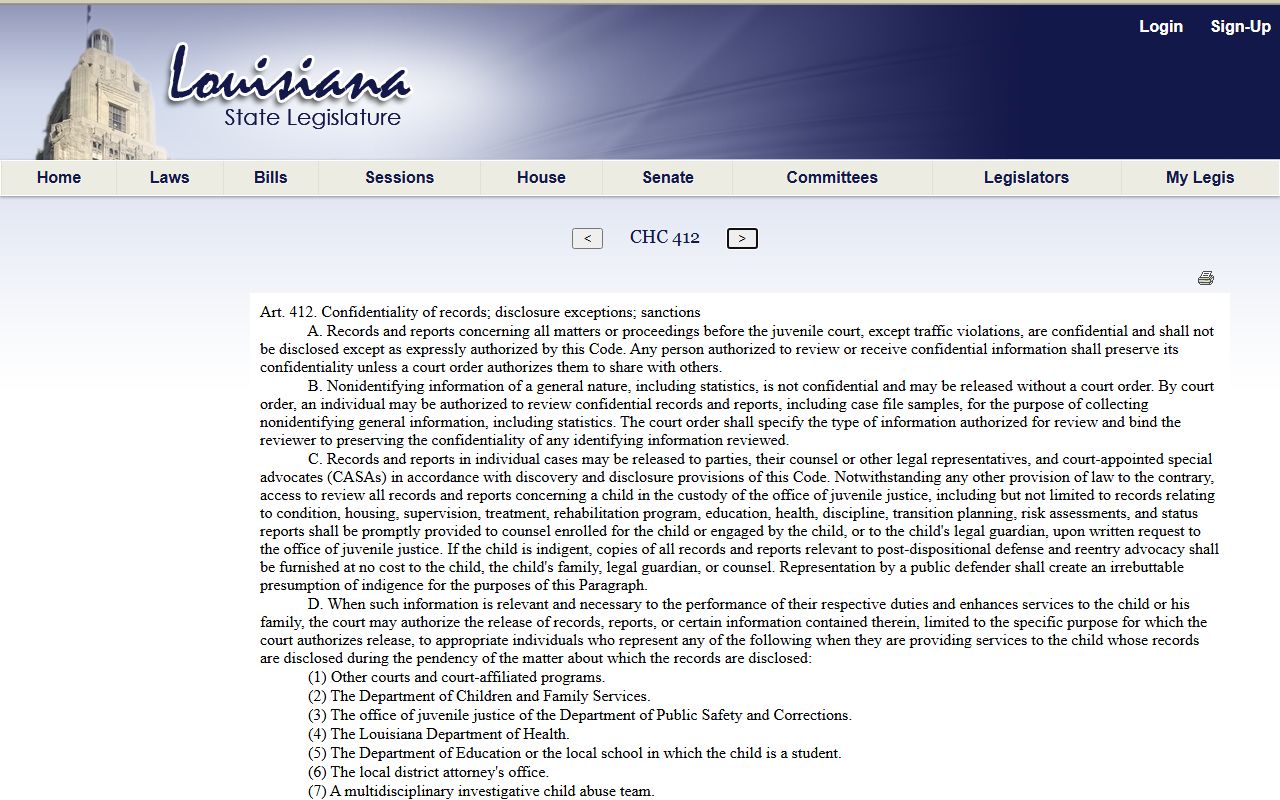
Juvenile confidentiality is one reason a complete public criminal search may still omit records that exist in court systems.
Federal Criminal Records Separate
Federal criminal prosecutions in Baton Rouge are separate from East Baton Rouge Parish criminal court records. The U.S. Attorney's Office for the Middle District of Louisiana enforces federal criminal laws and represents the United States in federal civil matters. Federal case records are accessed through PACER and CM/ECF or through the federal court clerk, not through ClerkConnect. A person held locally can also move between EBRSO custody, state custody, and federal custody depending on the case stage and sentence.
The U.S. Attorney's Office for the Middle District of Louisiana is the federal prosecution source for cases outside the parish court system.
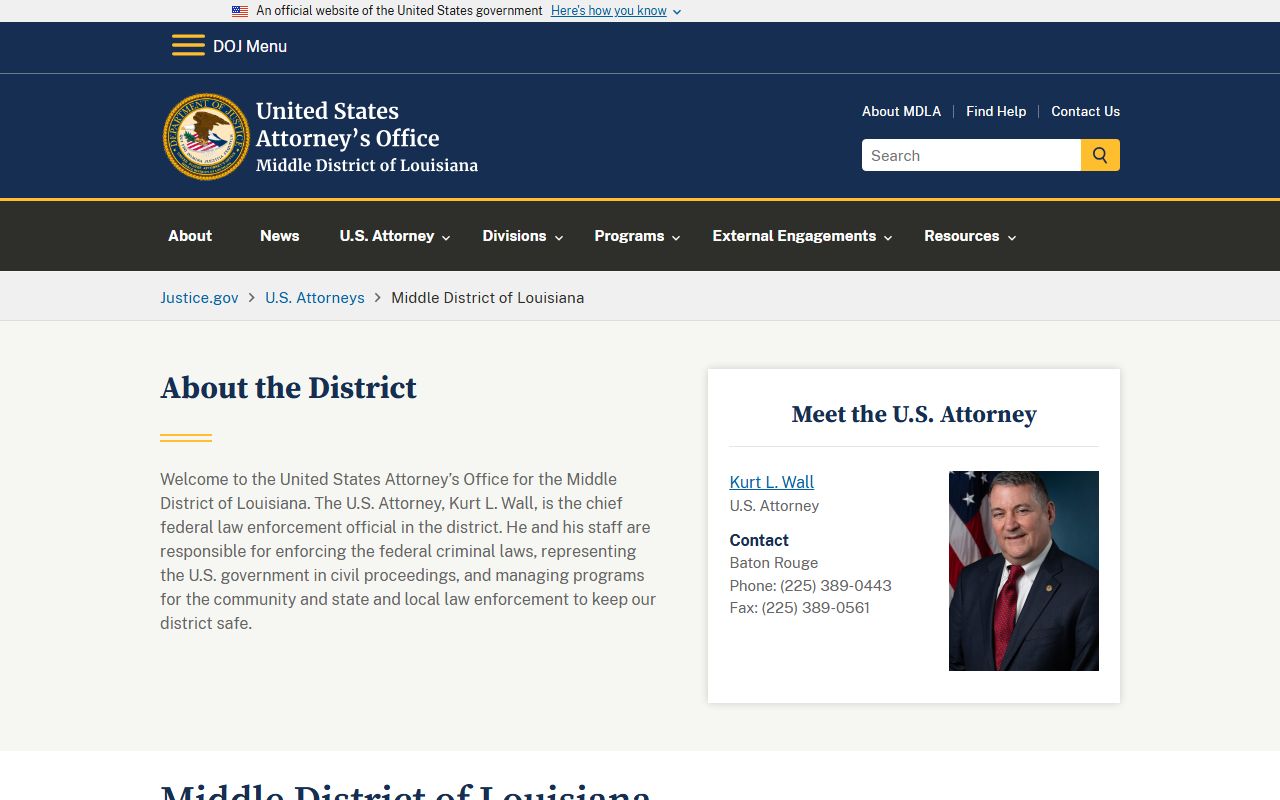
Federal records should be searched only when the case is federal, because parish court dockets and federal dockets are different systems.
Restricted East Baton Rouge Criminal Records
Restricted criminal court records include juvenile matters, sealed records, expunged cases, adoption-related proceedings, mental-health details, protected personal information, and active law-enforcement or prosecutive records. Domestic violence and protective-order cases may have public docket pieces but restricted safety details. Public copies may redact birth dates, account numbers, minor names, addresses, and victim or witness details. When a case is missing from an online search, the reason may be restriction, expungement, older archive status, a different court, spelling, or incomplete portal access.
Important: Criminal court records found for general lookup must not be used for FCRA-regulated employment, tenant, credit, or insurance decisions.